Paul Robeson
Eisenstein's interest in African culture and his sympathy for the fate of African Americans
On 23rd of December 1934, at the Belorusskii railway station, Sergei Eisenstein met Paul Robeson – the famous actor, singer and philologist. Eisenstein had succeeded in having Robeson invited to the USSR. He hoped that he would not only give concerts, but would also play General Dessalines in ‘The Black Consul’. This was a film project Eisenstein had been planning about the "black revolution" in Haiti in the 18th century. The story’s protagonist was the leader of the rebels, Toussaint Louverture, who was treacherously murdered by Napoleon Bonaparte. Eisenstein was not allowed to film the "Black Consul".
Already in 1930-1931, Eisenstein wanted to make a film about the Haitian revolution in America: "Black Majesty" based on the novel by John Vandercook. The film‘s story takes place during he second phase of the revolution: after the murder of their leader the former slaves negotiate with the whites government. The tyrant Henri-Christophe becomes the selfproclaimed king of Haiti. This was the part Eisenstein had intended for Paul Robeson.
Eisenstein wrote that this film would be: "A tragedy about the decline of a revolutionary leader turning into a despot". But at that time it was impossible to make such a film, neither in America nor in the USSR.
Three years later, Eisenstein intended to cast Robeson in a film about the Spanish Civil War. His part was the one of a Moroccan soldier who had deserted General Franco's army to join the Republican side. But this project too, remained unrealized.
Eisenstein was also dreaming to make a film about Pushkin. He wanted to invite Robeson to play the great Russian poet's Ethiopian great-grandfather.
In Eisenstein's apartment several objects reflect his friendship with the African-American actor: his portrait with a dedication, books Robeson sent to Moscow, and a series of records with Paul Robeson's recordings of spirituals and songs.

-
 Cover of the ‘Close Up’ magazine of September 1933.
 -
 Film stilll of ‘Emperor Jones’. Clipping of the magazine ‘Close Up’ of September 1933.
 -
 Film Still of Paul Robeson in ‘Emperor Jones’.
 -
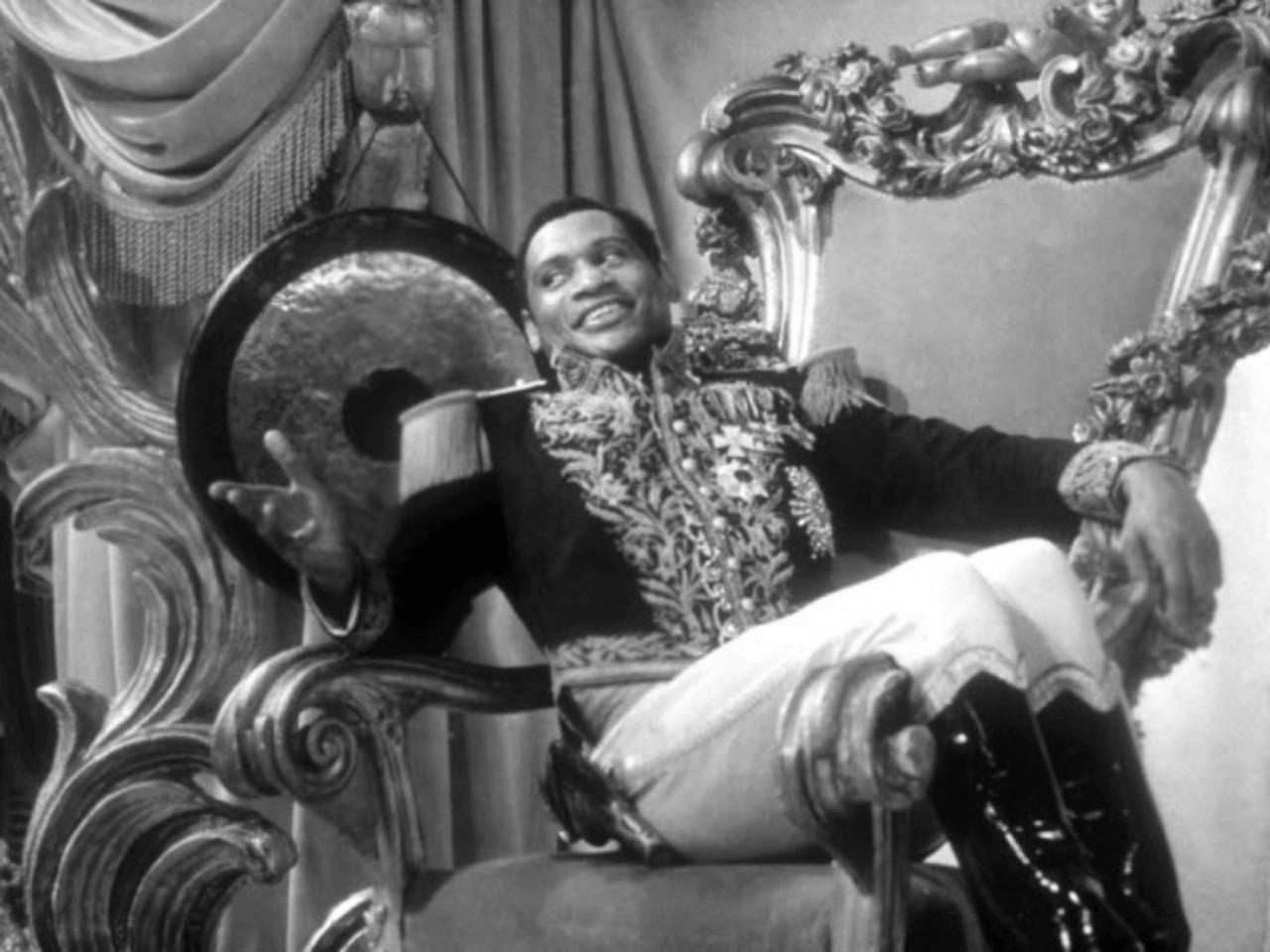 Film Still of Paul Robeson in ‘Emperor Jones’.
 -
 Film Still of Paul Robeson in ‘Emperor Jones’.
 -
 Film Still of Paul Robeson in ‘Emperor Jones’.
 -
 Eduard Tisse, Paul Robeson, Herbert Marshall and Sergei Eisenstein.
 -
 Eduard Tisse, Paul Robeson, Herbert Marshall and Sergei Eisenstein.
 -
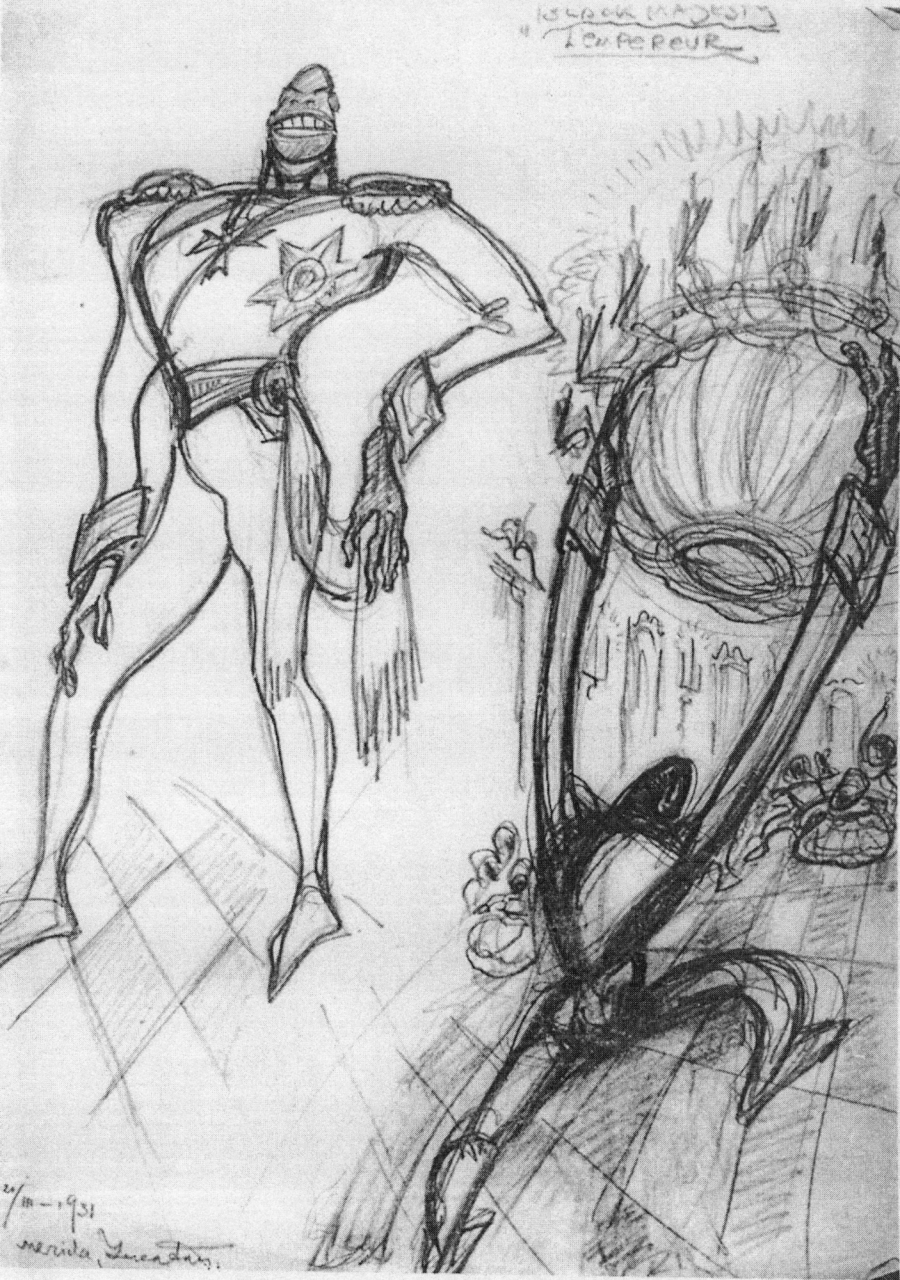 ‘L’Empereur’.
 -
 ‘The Last Parade (‘L’Agonie)’.
 -
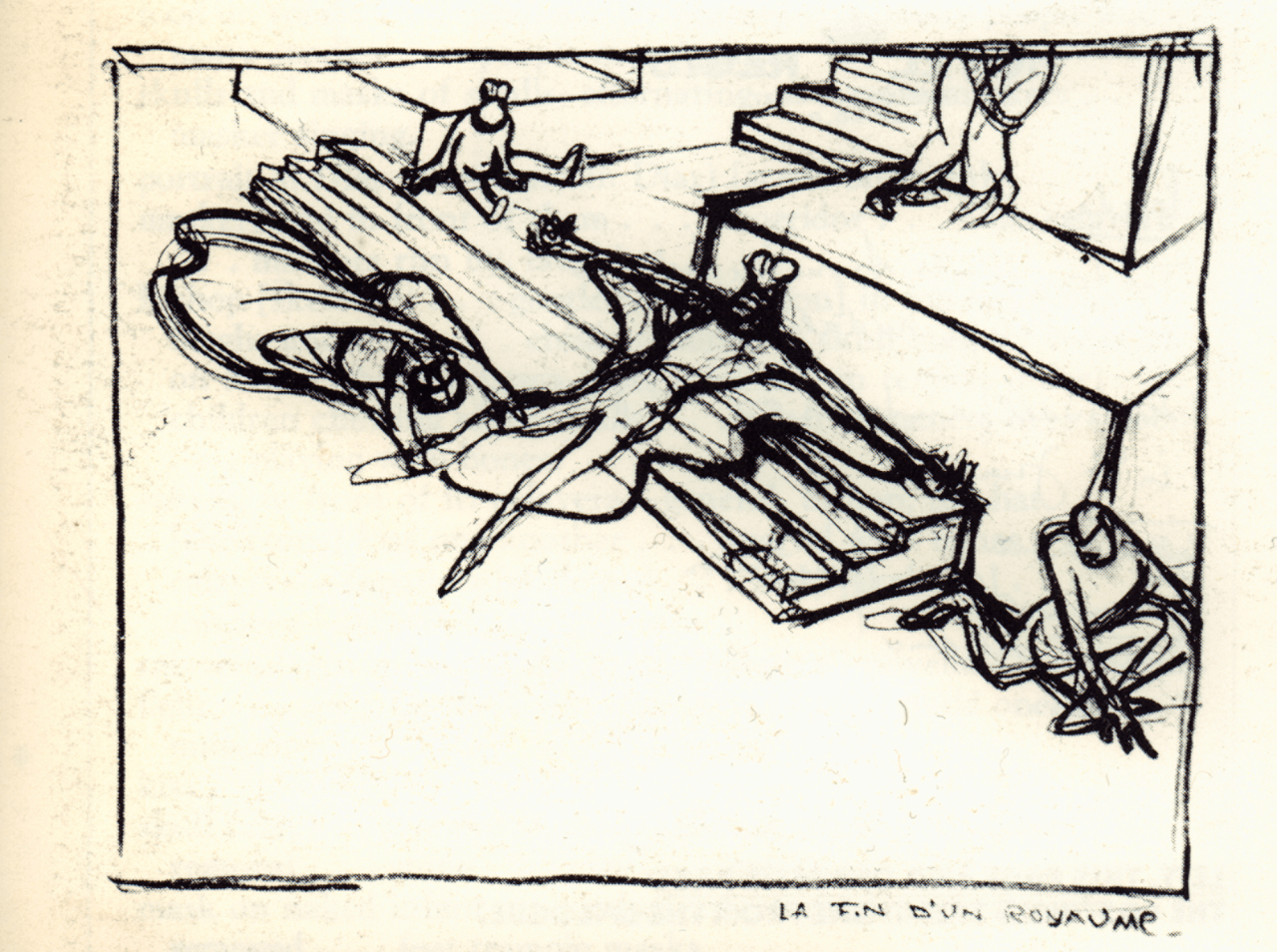 ‘La Fin d’un Royaume.’ (The end of a kingdom).
 -
 ‘Les 2 principesse’. (The two princesses).
 -
 Handwritten dedication on the title page of ‘Black Majesty. The Life of Christophe, King of Haiti’ by John Vandercook.
 -
 Typescript excerpt from ‘The black Jacobines’ by C.L.R. James, 1963, and a handwritten note from Jay Leyda to Naum Kleiman.